
Robotic Total Stations
Learn more, compare your options and talk to our specialists
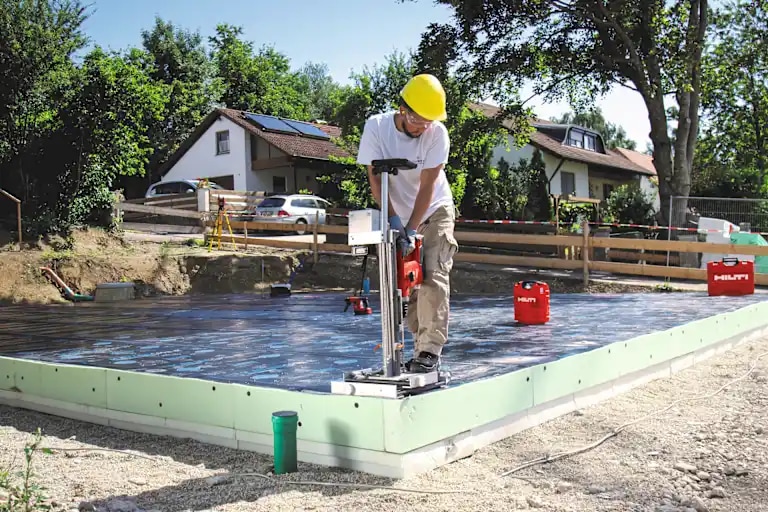
One of the most crucial parts of any construction job is planning and plotting what’s on paper into the ground on site. As most projects face mounting costs and pressure, there is no margin for error when it comes to getting the groundwork and initial foundations right.
A robotic total station, sometimes known as a total station or automatic total station, helps site surveyors, engineers and other construction specialists with an array of early project tasks. These include boundary surveys, construction stakeout, setting out foundations, layout, laying out reference points from BIM plans, locating underground assets, structural monitoring and more.
One of the most compelling reasons to use a modern total station, such as those from Hilti, allow for single person operation – compared to other models or previous processes which required two-person operation. This saves resource for firms who may not have the capacity to have two people out on a job at any one time.
In addition, a robotic total station leaves no room for error when it comes to measurements and tracking. Making sure your projects start with accuracy and confidence.

When you buy from a premium construction company, you get so much more than just a top-of-the-range product. You get peace of mind with a two-year warranty on the main layout tools, such as the PLT 300, PLT 400 and layout tablets. It’s also worth noting that our PLT 400 is the first construction layout tool with automatic levelling and site self-calibration, helping ensure you work with accuracy every time.
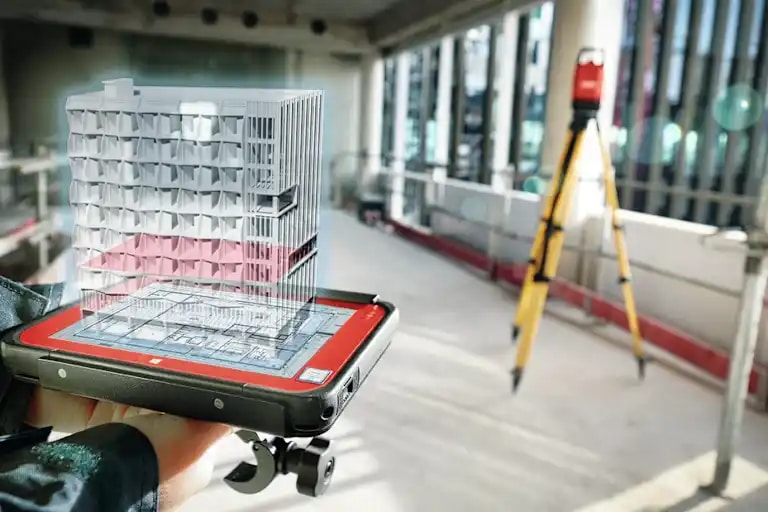
Our total stations are built to withstand the elements with IP 55 ratings for dust and water spray, while still operating between temperatures from minus 20 to 50 degrees. That means you can still get to work in sub-optimal conditions or environments and not lose time on site. In addition, our PROFIS Layout Office design software also makes preparing BIM data for the field easier than ever.
Yes you can. If you’re looking at options to get your hands on a robotic total station, you can choose to either purchase outright or lease these direct from Hilti with our Fleet Management approach. This includes free unit calibration and repairs for the duration of the lease with fixed monthly costs.
In addition, our Fleet Management lease also includes theft coverage, where we cover up to 80% of costs of stolen tools and a free loan tool for whenever you send your PLT to us for repair - minimising downtime on site and making sure you always have a tool.
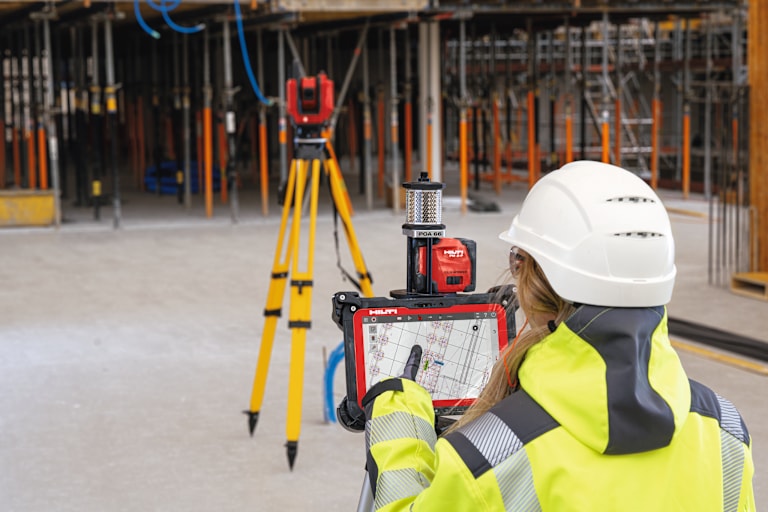
A robotic total station is a device that is widely used in the construction industry to survey an area prior to, or during, construction. While old fashioned methods included the use of string and multiple people to measure distances on site, robotic total stations of today can be operated by one person using wireless connectivity to save time.
While this is a professional tool used by construction specialists, a robotic total station can be used to accurately measure or set-out key points on a job site. It can help to verify plans on the ground and measure points on a site to help ground teams work in the correct locations.
How to use a robotic total station?
How you use a total station would potentially depend on the use or mode you’re using it for. The initial part of the setup for many jobs would be to mount and level the unit on a tripod or fixed point. Once set up, you would need to set or program the unit to its current location using co-ordinates or another fixed location(s) relative to where it is. Some devices, such as Hilti’s PLT 400-4, offer self-calibration to make the setup process easier.
Once you’ve set up your unit, and assuming you’re using an additional remote-control unit or tablet, connect your additional hardware to the total station via Wi-Fi or Bluetooth. This part of the setup could also include connecting prisms or reflection rods to the tablet and/or total station base unit - to help with measuring or layout tasks.
Then, assuming you either have plans to use as a reference or points to measure, you can set your robotic total station to the relevant mode such as measuring, set-out or plotting, while tracking your movements. Once completed you can save changes on the device, or to the cloud, and then review on PC or laptop.
The manual method of measuring and plotting a project would often require a surveyor to operate the base unit and position the reflector rods. Older methods would also include one or 2 surveyors using a ball of string to measure points while noting them down on drawings.
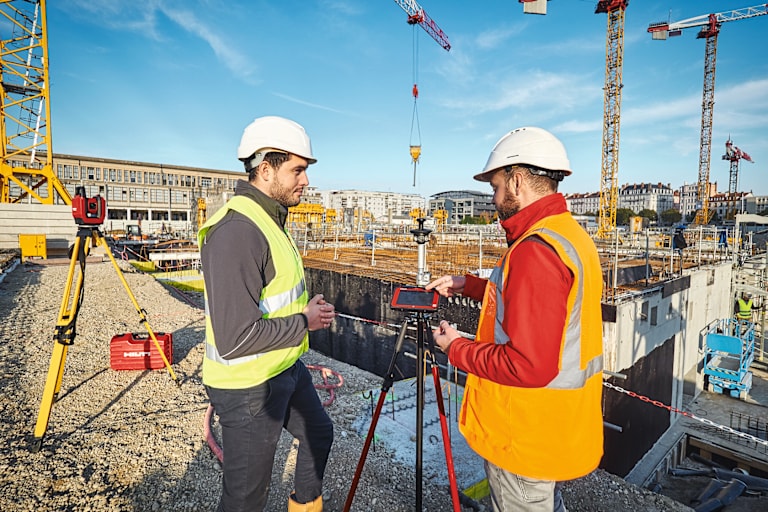
Modern total stations also work with reflector rods to help the base unit target and measure a distance between 2 points. However, with current robotic total stations users can also use a wireless tablet to see measurements, points and layout of a project in real time, without having to be physically present at the base unit – as it tracks the user and reflection rods autonomously. This enables single-person operation on a task, which saves resource and money that can be used elsewhere.
What’s the difference between total stations and a robotic total station?
While both terms are used to describe products in this area that do the same job, there is a big difference. Total stations will do everything that a robotic total station can do, but it needs two people to complete tasks – one at the base unit and another at any prism or reflector rod instruments where points are being marked or measured. A robotic total station on the other hand only needs one person to complete tasks, as once the base unit is set up it can be controlled remotely by a tablet or wireless control unit.
Request a no-obligation call or demo
Want to know more about the layout solutions that can help your business work better? Speak with one of our digital layout specialists to discuss the products and expertise that can help you.
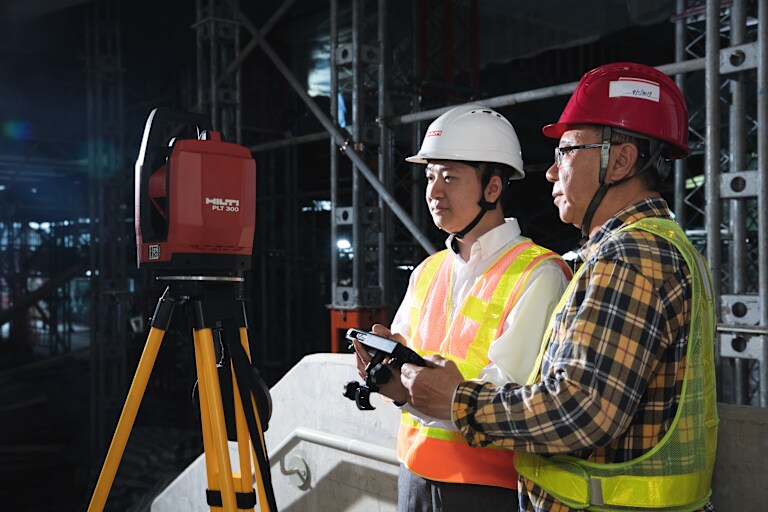
When it comes to measuring, set-out, layout and other tasks, there are a range of benefits when using a robotic total station:
Single person operation for tasks
Increased productivity – with only one person needed, frees up time for other employees
Reduced costs on resource
High accuracy vs manual and traditional methods
Are robotic total stations accurate?
Yes they are. While accurate in their own right, compared to traditional methods robotic total stations can offer pinpoint accuracy. Regular device calibration according to manufacturers spec is also recommended to maintain accurate readings each time.
Is a robotic total station worth the investment?
While the initial outlay to purchase or lease a robotic total station may be high, there are productivity gains which are worth considering. Especially if in the long run it saves money through the following ways:
Faster project completion – by using one person, rather than two, which frees resource for other project tasks
Lower people cost per task – by reducing the number of employees needed when using an RTS
Improved data quality – potentially compared to older methods of measurement, which reduces re-work and errors
Long-term return on investment – when used on several and large projects