
Hilti HDA undercut anchor helping to achieve higher performing design with more peace of mind
Enhanced performance with the help of updated ETA!
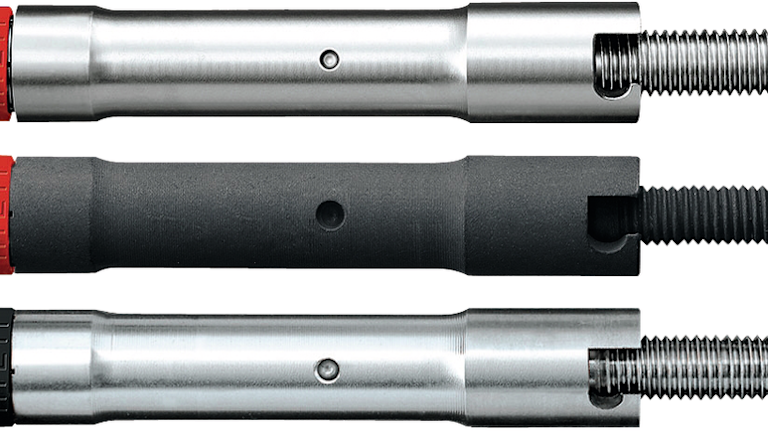
1. What is Hilti HDA?
pe of undercut anchor which has its unique shape and creates undercut by the anchor itself during its installation (Fig. 1.1). The anchor features an undercut sleeve, that when tightened or activated causes the anchor to create small expansion and grip the concrete tightly. The undercut holds the anchor firmly in place by creating interlocking forces between anchor and concrete.

Fig. 1.1: Undercut of concrete created by the anchor (HDA) or installation tools
The assessment document for Hilti HDA anchors, ETA-99/0009 (2015) [1], refers to ETAG 0001 Annex C for design against static and EOTA TR 045 against seismic loading. However, EN 1992-4:2018 completely replaces both the standards for design of anchors under static and seismic loading conditions. The growing demand for use of Hilti HDA anchor for structural and non-structural applications and the requirement by designers in terms of code compliant technical data, higher performance in tension and shear (static and seismic), less edge distance and spacing due to geometrical limitations or target enhanced design life for industrial and infrastructures, requires an upgrade of the existing assessment documents. Accordingly, a reassessment of Hilti HDA anchor performance was carried out and the Hilti HDA anchor portfolio is relaunched along with the upgraded ETA and ICC-ESR documents. Chapter 5 discusses in detail the area of improvements as per updated ETA.
Before going in to details of the changes in updated ETA assessment, the main advantages and key application areas are discussed in the following Chapters 2 and 3. 2.
2. The main advantages of the HDA anchor
Hilti provides a complete SPEC2SITE offering for your applications suitable for HDA undercut anchors, enabling you to design better specifications.

Table 2.1: HDA SPEC2SITE offering
HDA anchors are made of carbon steel, sherardised and stainless steel and available both in pre-set (P/PF/PR) and through-set (T/TF/TR) version (Table 2.2).

Table 2.2: HDA anchor portfolio
For more details regarding products and installation steps refer to the IFU documents which can be found on the product pages under operating instructions and are also linked below:
HDA-P
HDA-T
3. Key applications for the HDA anchor
Hilti HDA anchor is suitable for a variety of demanding structural and non-structural applications including nuclear power plants under static and dynamic loading (shock, seismic, fatigue) in cracked and uncracked concrete. Some of the key applications are as follows (Fig. 3.1):

Fig. 3.1: Different applications for HDA anchor
4. What are the key assessments available for the HDA anchor?
HDA anchor has most of the relevant approvals for use in cracked / uncracked concrete under static and dynamic loadings (see Table 4.1) including the use in nuclear power plants under NQA-1 nuclear quality assurance program.
European Approvals | |
Approval no | Application / loading |
ETA-99/0009 | Static, quasi-static, Seismic |
ETA-18/0974 | Fatigue |
BZS D 09-601 | Shockproof fastenings in civil defense installations |
Z-21.1-1987 | German national approval for use in nuclear power plants |
Table 4.1: EU approvals for HDA
5. ETA enhancements
5.1 Concrete cone k1 factor
The old ETA-99/0009 (2015) [1] did not mention the concrete cone resistance factor 𝑘1 for cylinder strength of concrete (𝑓𝑐𝑘,𝑐𝑦𝑙) and considered cube strength of concrete 𝑓𝑐𝑘,𝑐𝑢𝑏𝑒), which is not in line with the current design standard (EN 1992-4 [2]). ETA-99/0009 (2025) [3] defines higher values of 𝑘1 as 12.7 for uncracked and 8.9 for cracked concrete (i.e., same as for cast-in headed studs) for 𝑓𝑐𝑘,𝑐𝑦𝑙 assessed following the state-of-the-art EOTA requirements.
5.2 Improved pull-out resistance
The pull-out resistance values in updated ETA [3] are mentioned same as steel resistance values (𝑁𝑅𝑘,𝑠 ) for uncracked concrete and same as concrete cone resistance (𝑁𝑅𝑘,𝑐 0 ) for cracked concrete , because they are not decisive in design. In the old ETA [1] the pull-out resistance values were smaller than the cone resistance.
5.3 Minimum edge distance and spacing
After more detailed testing and assessment, minimum edge distance and spacing required for installation of anchors have been reduced up to the allowable limit in updated ETA-99/0009 [3] (Fig. 5.1). The reduction in edge distance and spacing helps using HDA anchors in thinner elements.

Fig. 5.1: Change in minimum edge distance and spacing values
5.4 Improved shear performance and use of filling set
In old ETA [1] the provision of using Hilti filling set with anchors was not included. In the updated ETA [3], the shear performance has been improved 1) by retesting without filling set 2) by using filling set for both static and seismic condition.
By retesting HDA anchors the shear performance gets increased considerably up to 26% and 41% under static loading without and with Hilti filling set, respectively. Similar increases in performance have been achieved for the seismic shear resistances as well. Updated ETA [3] provides the value of steel resistance in shear for both the options, with and without filling set. Steel resistances under static shear loading for HDA P anchor according to old ETA [1] and updated ETA [3] with and without using filling set is exemplary shown in Fig. 5.2.

Fig. 5.2: Steel resistance under static shear loading for HDA-P
5.5 Effective length consideration for concrete edge break-out failure under shear loading
In the old ETA [1], the values of effective length 𝑙𝑓 used in the calculation of resistance against concrete edge break-out failure were lesser than the value of effective embedment depth ℎ𝑒𝑓 for each diameter of anchor. The updated ETA [3] considers the 𝑙𝑓 same as ℎ𝑒𝑓 as per EN 1992-4, cl. No. 7.2.2.5 (6) for post-installed HDA anchors. Table 5.1 shows the effective length values considered for concrete edge break-out resistance.

Table 5.1: Effective length values in old and updated
As per updated ETA [3], there can be an increase in concrete edge resistance with the increase in 𝑙𝑓 value up to 12%. A sample graph for the change in characteristic concrete edge resistance for single anchor is shown in Fig. 5.3.

Fig. 5.3: Concrete edge break-out characteristic resistance for static loading (C20/25 grade concrete with edge distance of 1.5ℎ𝑒𝑓)
5.6 Removal of Centering washer
Centering washer is not part of the updated ETA [3] and all resistance values against shear loading for HDA-T/TR anchor are provided without the same.
5.7 Extended design life of 100 years
The design life is extended to 100 years in updated ETA [3] and resistance data for tension and shear are provided for both 50 and 100 years.
5.8 Fire resistance data in ETA
Fire resistance data for fire ratings of 30, 60, 90 and 120 mins against tension and shear loading are included in updated ETA [3]. This will help in the use of HDA anchors in case of fire exposure as well.
6. Conclusion
In conclusion, the updated ETA with improvements in performance and requirement of minimum edge distance and spacing will help HDA anchor to be used in more safety critical applications.
Please visit HOL page for more details on anchors
To start designing, visit https://profisengineering.hilti.com/.
7. References
[1] ETA-99/0009: Hilti HDA and HDA-R, Marne-la-Vallée: CSTB, 06.01.2015.
[2] EN 1992-4:2018: Eurocode 2 - Design of concrete structures - Part 4: Design of fastenings for use in concrete, Brussels: CEN, 2018.
[3] ETA-99/0009: Hilti HDA-P, HDA-PR, HDA-T, HDA-TR, Marne-la-Vallée: CSTB, 06.05.2025.
[4] EOTA EAD 330232-01-0601: Mechanical fasteners for use in concrete, Brussels: EOTA, 2021.
[5] S2C Handbook: Steel to concrete connections using Post-installed systems, Schaan: Hilti Corporation, 2024.
[6] EOTA TR 045: Design of Metal Anchors For Use In Concrete Under Seismic Actions, Brussels: EOTA, 2013.