
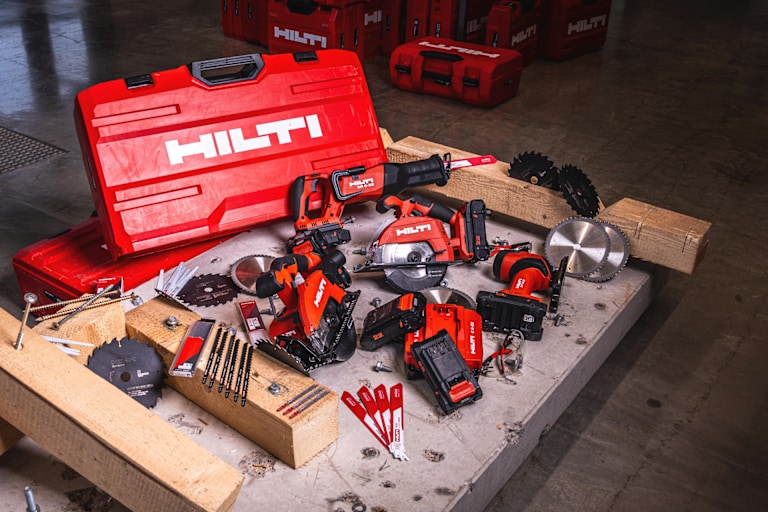
What to consider when buying a power saw
As a professional contractor or trade specialist, knowing which power saw to use is crucial. With a wide variety of products available, the choice can be overwhelming depending on your needs. Our 5-minute guide will take you through the options you need to consider.
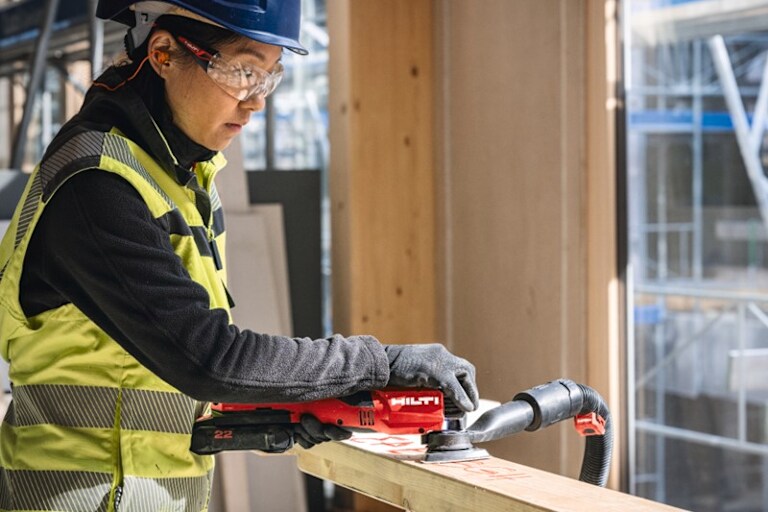
Types of power saw
There are several types of saws available in the market which can cover single or multiple applications.
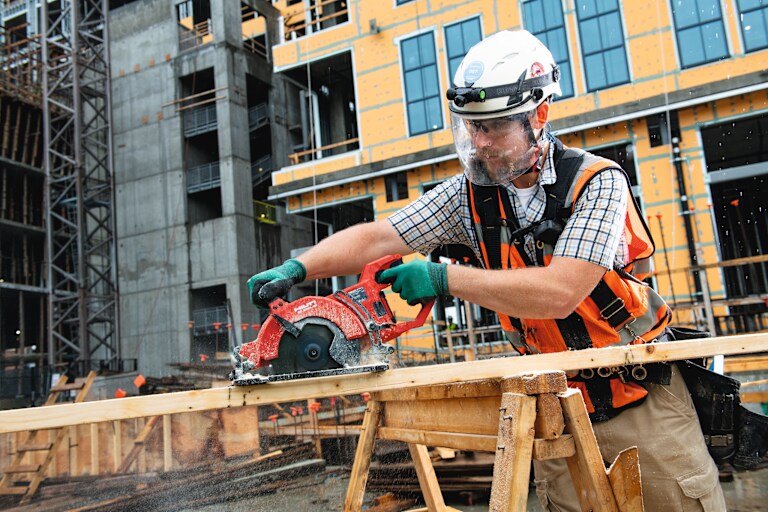
Circular saw: A single handle saw, designed for making for straight cuts in wood, metal and plastic materials
Table saw: Also known as a bench saw. Features a static blade in the middle of a ‘table’ which can be raised or tilted.
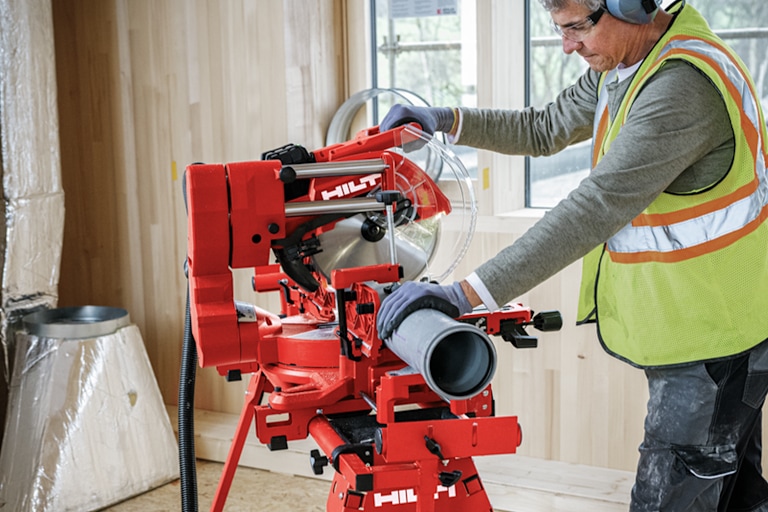
Mitre Saw: Involves a blade which is lowered on to the cutting material, either straight down or at an angle.
Reciprocating saw: Sometimes known as a sawzall. Versatile tool that can tackle a range of heavy duty jobs.
Jigsaw: Can cut curves and in a straight line in wood, metal and plastics
Band saw: Commonly used in wood and metal work. Features a blade that is fitted around two wheels.
Other saws to consider
While the saws above are some of the most common tools used by professionals, the following saws are also worthy of a notable mention.
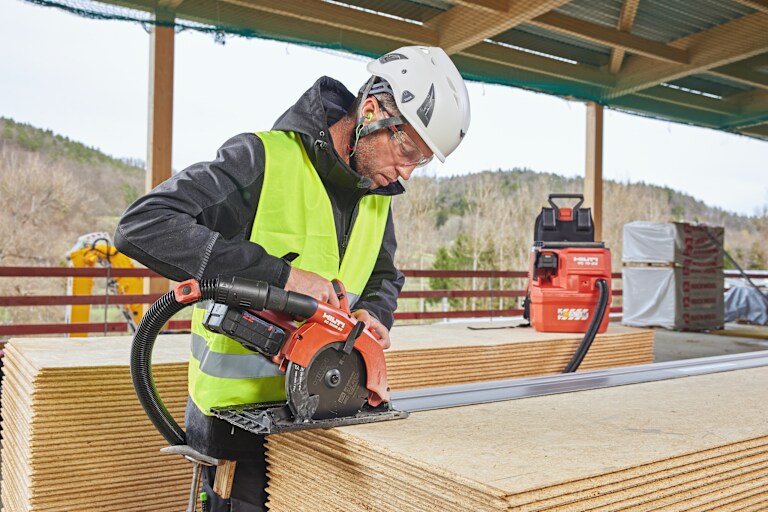
Plunge saw: A plunge saw is similar to a circular saw but slides along a fixed track to make cuts.
Chop saw: Similar to a mitre saw but doesn’t cut at an angle.
Chainsaw: Heavy duty saw for cutting and demolition. Features a chain that is interlocked with cutting teeth.
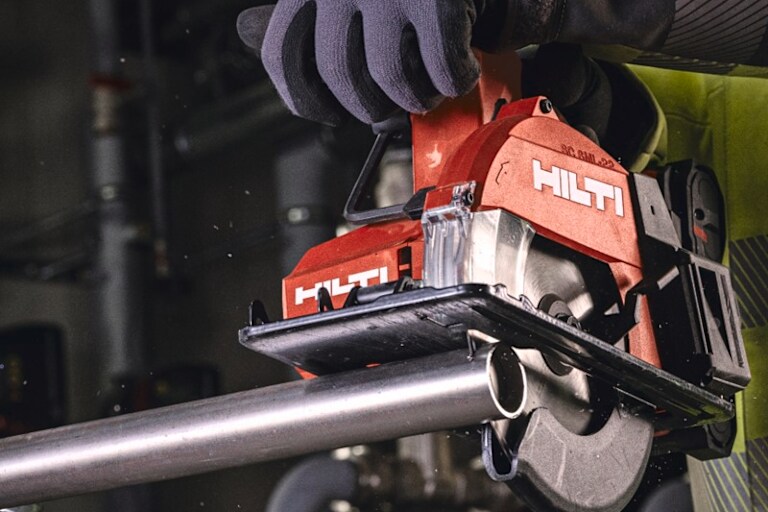
Cut off saw: Also known as a concrete saw. Heavy duty saw for cutting concrete, brick and masonry.
Diamond wall saw: Usually features a rig-mounted unit for heavy duty applications in concrete, brick and masonry.
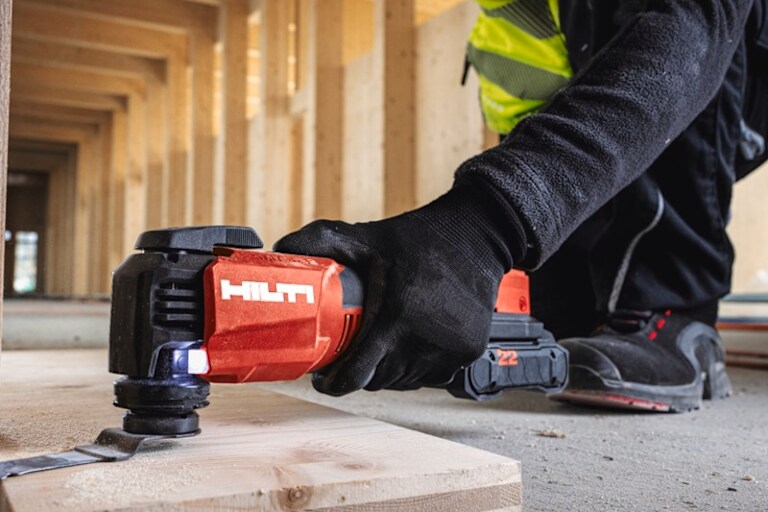
Multi tool: Versatile tool that can accommodate different blades for cutting, sanding and grinding tasks.
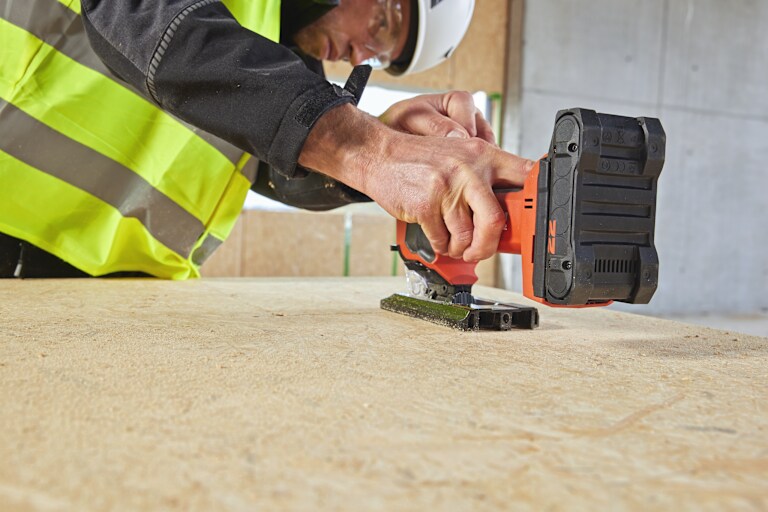
Common features
While not exclusive to a particular tool in the power saw category, the following are worth considering.
Stroke length: A stroke length is based on the amount a blade moves in a single repetition (up and down). This is usually measured in millimetres. The longer the stroke length, the greater the number of teeth on the blade will hit the surface of the material you’re working on.
Strokes per minute: This means exactly that. A count of the number of strokes (up and down) the blade completes in a single minute. Applies to recip saws and jig saws.
No load rpm / no load speed: On selected tools where a circular blade is involved, revolutions per minute (RPM) reflects the number of revolutions that the blade wheel makes. ‘No load‘ means revolutions without a bit or when penetrating a surface.
Variable speed option: Faster speeds are useful for quick cuts, while slower speeds can allow for more precision if it’s a factor in your tasks. Useful across different applications where required.
Cutting depth: Refers to the maximum amount, usually in millimetres, that a device can cut to. Different tools will have different depths and applications, but it’s also worth considering the ergonomics of using tools when cutting to a certain depth.
Blade fitting/ clamp: Each tool within the power saw category will often have a fitting or clamp that accommodates universal blades and fittings – making it versatile in accepting blades from most leading manufacturers.
Safety features
Power saw tools, if not operated correctly, can cause serious damage or injury. That’s why safety is one of the biggest features to consider.
Blade guards: Based on the tool, some products offer blade guards to prevent injury, accidental contact and debris hitting the operator. It’s always recommended no to remove any guard from the tool itself unless you’re performing maintenance.
Vibration: As the motor and tool components create vibration during operation, it’s always worth considering a tool that can prevent hand arm vibration syndrome (HAVS) with reduced vibration control. As a professional tradesperson, prolonged use of tools is always a possibility. So features like Active Vibration Reduction on Hilti’s tools can help reduce the risk.
Weight: Alongside vibration control, tool weight is something that needs to be considered as a safety feature. This is because heavier tools can increase the chance of user fatigue on site, which in turn can increase the risk of injury.
Dust extraction: Most leading manufacturers will feature dust extraction ports on their tools where possible. This reduces debris and inhalation of fine dust during operation. With universal-sized ports on some, you can connect vacuum hoses from other brands to ensure you stay safe.
What materials can a power saw cut though?
The main surface materials you can use a power saw with are generally types of wood, metal and plastic. Some saws are better suited for different cut types, though the type of finish you need on your cut will also dictate the type of saw you use.
There aren’t many saws that you would use with masonry, other than a cut-off saw or potentially a circular saw – as professionals in the trade are more likely to use an angle grinder or brick chisel on stone and/or brick for ease of use
Cut type
There are various cuts you can make with a power saw, with some saws better for certain cuts than others.
Straight line cuts are the most common and basic of cuts. In terms of wood, this is where the material is cut in the same direction as the grain. These are also known as rip or ripping cuts. Best tools for straight cuts: most power saws.
Piping cuts are essentially cuts made through pipe. These could be plastic or metal pipes. Best tools for piping cuts: Band saw, jig saw. For copper pipe you would use a dedicated pipe cutter or potentially a recip saw.
Cross cuts are made in wood, but across the grain rather than alongside it. Best tools for cross cuts: This will depend on the application, but recip saw and jig saws are adequate, while circular saws offer better control.
Angled bevel cuts aresynonymous with interiors such as door frames and skirting boards. Best tools for bevel cuts: Mitre saws are the go-to, but table saws with angled blade capability can perform these cuts too.
Cutting shapes and free form are trickier and need power saws that are versatile and easy to handle. Best tools for shapes: jig saw and recip saws offer some degree of control, though a multi-tool could be an option depending on the material.
Why do premium and expensive blades matter?
Saws from most leading manufacturers command a premium price – so using a cheap blade will lessen the impact of the tool. Choosing quality blades with maximise the effectiveness of the tool by getting tasks done efficiently.
If you choose to use non-premium or poor quality blades, this may even increase the wear of your tools over time. So always consider top blades for your saws.
Brushless vs carbon brushes motor
At the heart of your saw, there will be a motor that drives the tool. The motor will either be a brushless motor or carbon brush motor.
Motors that use carbon brushes, also known as “brushed motors”, will create more friction, heat and wear over the lifespan of the motor. Brushless motors, which use magnets or electronics to operate instead of carbon brushes, create less heat and friction, which can prolong the lifespan of the motor and tool.
However, brushless motors come with a higher cost to due to the technology involved. So while a motor with carbon brushes may be cheaper, it may not last as long as you need it.
In addition, you may be faced with more frequent repair and maintenance costs during the lifespan of the saw.
Shop the right saws for your needs
We have a range of power saws to choose from that work in most trades. In addition, you can buy or lease these directly from Hilti for a monthly fee.