
Building the Future: 7 Key Construction Trends That Will Shape the Industry
The construction industry is navigating a transformative era. Marked by rapid technological advancements, a strong commitment to sustainability and shifting workforce dynamics, these construction trends are redefining the future of our industry.
1. Digitalisation and Technological Innovations
The construction industry's digital transformation is spearheaded by a process known as Building Information Modelling, or BIM for short. This process leverages 3D models and enhances them with the dimensions of time (4D), cost (5D), and energy efficiency (6D), providing a complete view of projects from start to finish. Integrating AI with BIM takes this a step further, offering predictive insights for design, construction, and maintenance. This combination boosts efficiency, sustainability, and smart decision-making. Meanwhile, there's a growing emphasis on sustainable construction practices. Zero Net Energy Buildings (NZEBs) are becoming more popular, driven by their ability to cut energy costs and enhance sustainability.
Global BIM Market Growth: The Building Information Modelling market, pivotal in construction's digital transformation, is on a significant rise. Valued at USD 5.20 billion in 2019, it's projected to grow from USD 5.71 billion in 2020 to USD 11.96 billion in 2027 at a CAGR of 11.1%.
North America's Leading role: Dominating the global BIM market, North America, particularly the U.S. and Canada, is expected to contribute significantly to this growth. This is spurred by urbanisation, government initiatives, and a shift towards digital tools.
European and Asia-Pacific Markets: Europe, with a high rate of BIM adoption noticeably in Scandinavia and Asia-Pacific (the largest construction market globally), are also seeing rapid technological adoption driven by urbanisation and infrastructure development.
BIM Adoption Rate: The adoption of Building Information Modelling (BIM) in the United States is widespread and growing, with its use spanning across various disciplines and applicable to a majority of construction projects.
While the exact adoption rate is not specified, it is evident that BIM plays a significant role in the U.S. construction industry.
A complete transition to BIM, complemented by the widespread use of digital twins, is expected to take another decade, as firms are currently blending traditional and new methods like 2D drawings and 3D models.

2. Robotics and Augmented Reality in Construction
Construction Robotics are enhancing productivity and safety. Robots can now perform tasks like drilling, bricklaying and welding, marking a significant shift toward automation. This trend involves not only on-site physical tasks, but also extends to modular construction and digitised planning. While automation raises concerns about job displacement, the construction industry's unique and unpredictable environment limits the extent of automation, maintaining the need for skilled labour. Moreover, the integration of robotics is expected to create new job opportunities, particularly in global infrastructure and housing projects, necessitating a workforce skilled in both traditional construction and new technologies.
3. Data-Driven Decision-Making and Predictive Analytics
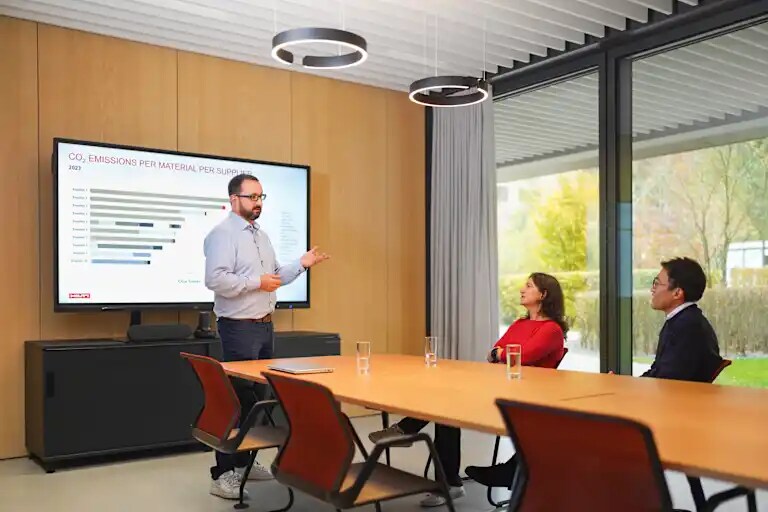
Construction’s growing reliance on data-driven decision-making and predictive analytics is reshaping the industry. Big data and machine learning improve project management by predicting risks, optimising resources, and handling complex data more effectively than traditional methods, boosting efficiency and safety.
Predictive modelling now enables earlier identification of risks, delays and cost overruns, supporting more proactive decisions. Together, these advances are driving a more efficient, cost-effective and forward-looking construction sector.
4. Labour Challenges and Skills Shortage
Labour shortages and rising costs remain major challenges in construction. AI, automation and robotics are helping to fill workforce gaps, improve safety and efficiency, and support more sustainable building through reduced waste and precision-led tasks. These technologies are also reshaping project management, from on-site surveying to automated material delivery and safety monitoring.
At the same time, addressing skills shortages through apprenticeships and training is essential, particularly in green construction methods such as mass timber and low-carbon concrete. Growing recognition of mental health and wellbeing is also vital, helping to build a more resilient and productive workforce.
5. Advanced Safety Measures and Automation
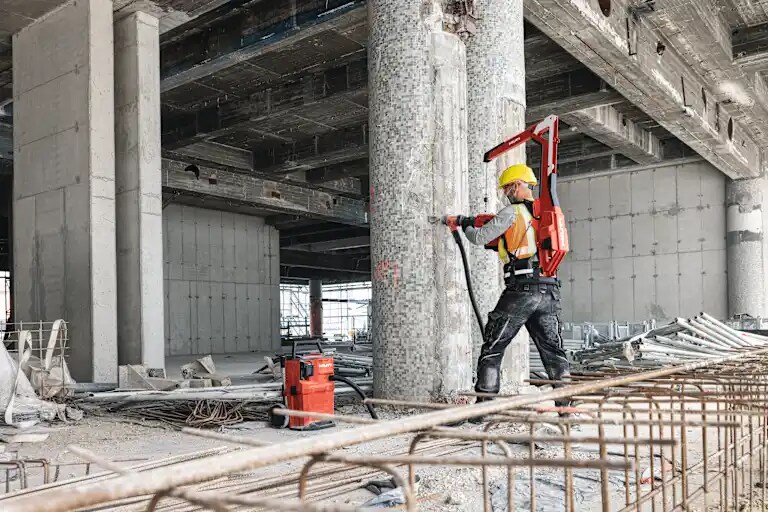
Safety in construction is being transformed by advanced technologies such as wearable devices, smart helmets and sensors that monitor conditions, detect falls or impacts, and alert supervisors for rapid response. Drones are also widely used for site surveys and inspections, reducing the need for workers to carry out risky manual checks in hard-to-reach areas.
Automation is further improving safety by limiting human exposure to hazardous tasks. Robotics, automated guided vehicles (AGVs) and AI-driven monitoring systems now handle material transport and analyse site conditions to predict potential risks, helping create safer and more efficient construction sites.

6. Sustainability and Disaster-Resistant Construction
NZEBs, also known as Zero Net Energy (ZNE) buildings, are rapidly growing in importance in the global construction market. These buildings, designed to produce as much energy as they consume over a year, are driven by government initiatives and increasing demand for sustainable buildings. The global NZE building market, encompassing these energy-efficient projects, is expected to expand from $42.9 billion in 2022 to $109.3 billion by 2027[1] . This growth is propelled by efforts to reduce reliance on non-renewable energy sources and increasing government targets for NZEBs.
In addition to sustainability, the construction industry is increasingly focusing on disaster-resistant construction. This involves designing and building structures that can withstand natural disasters such as earthquakes, floods, hurricanes, and extreme heat events. Key strategies include using materials that are more resilient to environmental stress, incorporating seismic retrofitting techniques, and designing buildings with higher thermal resistance to cope with extreme temperatures. For example, earthquake-resistant construction often involves flexible building designs that can absorb seismic waves, while flood-resistant buildings may be elevated or use waterproof materials.
California's mandate for all new residential buildings by 2020 and commercial buildings by 2030 to be ZNE buildings is an example of integrating sustainability with disaster resilience. These buildings not only contribute to energy efficiency but are also increasingly being designed with resilience in mind, ensuring they remain safe and functional in the face of natural disasters.
The integration of sustainability with disaster-resistant construction represents a holistic approach to building design, ensuring that structures are not only environmentally friendly but also safe and durable in the long term. This trend is becoming an increasingly attractive option in the construction sector, combining cost-effectiveness with resilience.
7. Megaprojects and Complex Construction Ventures
Megaprojects, characterised by their large scale, complexity, and significant impact, are not only reshaping the landscape of the construction industry, but also redefining the benchmarks for engineering and design. These construction projects often involve massive infrastructure developments like bridges, tunnels, and skyscrapers, requiring extensive coordination, financing, and time management. According to Statista, megaprojects have been growing larger globally, with many centred in the Arab Gulf Region. Construction software company 1Build estimates that before the end of the decade, the world will see the first construction megaproject with a cost estimation exceeding $1 trillion. Currently, several projects underway exceed $100 billion in cost.
Key trends in megaprojects include the use of integrated project delivery (IPD) for better collaboration, the application of advanced materials for durability and sustainability, and the adoption of smart city concepts for urban development. Notable examples include Neom City in Northwestern Saudi Arabia, the EU's Trans-European Transport Network, Dubailand, King Abdullah Economic City in Saudi Arabia, and Silk City in Northern Kuwait, which will feature the world's future tallest building. These projects present unique challenges beyond their immense scale and material costs.
The integration of advanced technologies like 3D printing is transforming the approach to these projects. 3D printing is pivotal in creating complex structures and components for these large-scale projects, enhancing design flexibility, and reducing material waste. Furthermore, the incorporation of renewable energy solutions, such as solar, wind, and geothermal energy, is critical in reducing the environmental impact of construction. These technological advancements are reshaping the way megaprojects are executed, balancing the challenges of scale, cost, and environmental sustainability.
Conclusion
The construction industry is a blend of innovation, sustainability, and adaptability. Embracing these trends is not just essential for staying competitive; it's fundamental for shaping a sustainable, efficient, and technologically advanced future in construction. This era is marked by the rapid integration of digital technologies, a heightened focus on eco-friendly practices, and an agile approach to market and environmental challenges. As the industry continues to evolve, those who leverage these transformative trends will lead in building the resilient, smart, and sustainable infrastructures of tomorrow.