
Performance Requirements of Cavity Barriers in External Cladding
We explore the reasoning behind Cavity Barrier performance requirements so you can make an informed decision on your project
Introduction
Why do we need Cavity Barriers
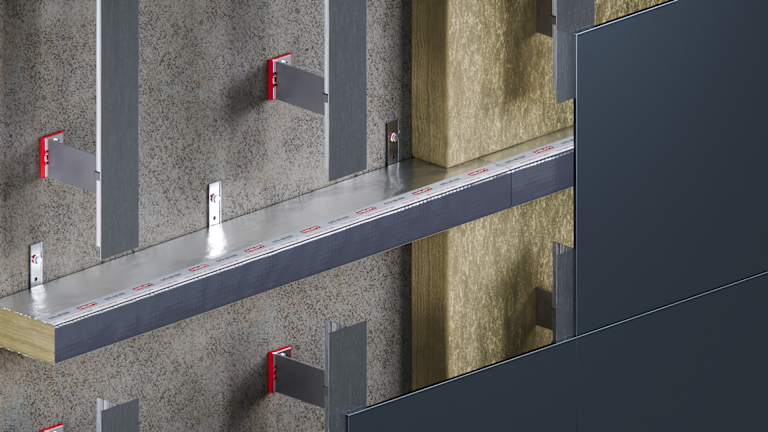
In the construction of a building, voids and cavities are created which could permit the unseen spread of smoke and flames. Cavity barriers are required to be installed to inhibit this spread. One key example of this are cavities between external cladding systems (e.g. rainscreen, masonry, etc.) and internal walls.
Performance requirements of Cavity Barriers
The strategic placement and minimum performance of Cavity Barriers in Integrity (E) and Insulation (I) are outlined in national regulatory frameworks as below:
England, Wales, Northern Ireland: Min E30 / I15 (Approved Document B)
Scotland: Min E30 (Scottish Technical Handbooks, BS 9991 clause 19.2 may apply)
Two queries are often raised based on the above. The overall rating appears low/insufficient and the insulation rating is deemed less critical. In the below sections we will address why this is the case.
Addressing the basis for the rating requirements
Below are some of the main aspects to take into consideration which explain this lower rating for Integrity (E30) and Insulation (I15 or N/A) required for Cavity Barriers and why there is a lower insulation rating requirement.
The purpose of Firestop and Cavity Barriers differ
Performance of full cladding system lowers overall expected performance
Cumulative fire rating/resistance as a fire progresses
Reduced risk of secondary ignition
The purposes of Firestop and Cavity Barriers differ:
Although Firestop and Cavity Barriers are both in place to impede the spread of smoke and flame, they each serve more specific purposes within their relevant application.
Firestop
is required to maintain compartmentation by closing imperfections of fit and/or openings for service penetrations so that the compartment rating is maintained to provide life safety.
Cavity barriers
are required to prevent the spread of smoke and flame through voids which may be hidden/inaccessible.
As the Cavity Barrier is not maintaining a compartment, the requirement upon it aren't as stringent.

Fig 1: Illustration of function of Cavity Barriers and Firestopping
Performance of full cladding system lowers overall expected performance:
In typical cladding build ups with masonry and rainscreen, the system is unlikely to achieve high ratings as they only have to achieve a reaction to fire classification and do not have to be tested for fire resistance. Therefore, cavity barriers are tested with more robust substrates to ensure product performance is captured (EN1366-4 and TGD19). Many factors can impact the expected performance of the system outside of cavity barrier ratings
Heat transmission through metal elements such as cladding rails, masonry brackets, rainscreen panels.
Reduced integrity of support systems and the masonry/panels under fire mean that the system would fail before the rating is achieved by a cavity barrier. For this reason full system tests such as BS8414-1 have a lower test duration (30 minutes BS8414-1).
The cladding system performance will limit the overall performance of the system Integrity and Insulation.
Don't let a high Cavity Barrier performance rating give false security on performance of the system.
Cumulative fire rating/resistance as a fire progresses:
Fire will typically originate in an internal compartment. It will have to break this compartment line, and associated fire rating, to enter into a cavity as well as re-entering in a similar fashion. In this scenario the fire is required to pass through two compartment lines in addition to the cavity barrier.
The cumulative resistance of all fire lines reduces the burden on the Cavity Barrier resistance itself.

Fig 2: Path of a fire crossing 2 compartment lines and a Cavity Barrier
Reduced risk of Secondary Ignition:
There is a restriction on combustible components and materials for higher risk buildings in most regulations. This means the insulation rating, which is targeted at mitigating secondary ignition of materials on the non-fire side, is less critical.
With less combustible materials being used in facades, the threat of ignition of materials is reduced.
Summary
Cavity Barriers are often over specified due to a misunderstanding of their use and expected performance. When considering a high EI rating for Cavity Barriers on projects (e.g. EI120) a number of points should be considered:
What is the minimum requirements of the regulations? (e.g. E30/I15 ADB)
Are these products being used as Cavity Barriers or Firestopping? (i.e. not an extension of a compartment)
Although the product achieved a high rating, is the system likely to cause a failure before this rating is achieved (e.g. failure of aluminum panels/rails, heat transfer of metal components, etc.)
Does the combustibility of materials in the facade mean the Integrity rating is more critical
With the above considerations you can ensure that not only are the regulatory obligations being met but that realistic expectations of the impact of the performance of Cavity Barriers is set.
Hilti Cavity Barrier Range
Hilti has an extensive Cavity Barrier range. Our range of testing and options ensure they are High Performing and provide More Peace of Mind when specifying.
Additionally along with our innovative brackets and other features make them Faster, Simpler and Safer to install than alternative barriers
Find the full range of Hilti Cavity Barriers here:
Ready-to-use joints and cavity barriers - Hilti United Kingdom
Installation video:
See how Hilti Cavity Barrier can save you time on site vs. alternate soltuions:

Hilti Firestop Selector
Selecting the correct firestop solution is complex and time‑consuming due to many approval documents and project variables.
Hilti’s Firestop Selector simplifies this by letting users input project parameters and automatically generating compliant, approved solutions.
The tool improves efficiency, reduces errors, and provides ready-to-use technical documentation for specification and design