

What do we need to consider when designing with a structures working life in mind.
When thinking about designing a new structure or rehabilitating an existing one, designers need to keep in mind the design working life that is stated and defined in Eurocode 1990 table 2.1 (figure 1)

Figure 1
But also designers might need to consider the local regulations when those are more strict than the general ones, for example, in the case of the United Kingdom. The requirement is even more stringent (UK National Annex to EC0) and category 5 (e.g Monmental building structures, highway and railway bridges, other civil engineering structures) requires an additional 20 years to the European standard, so, in total, 120 years intended working life (figure 2)
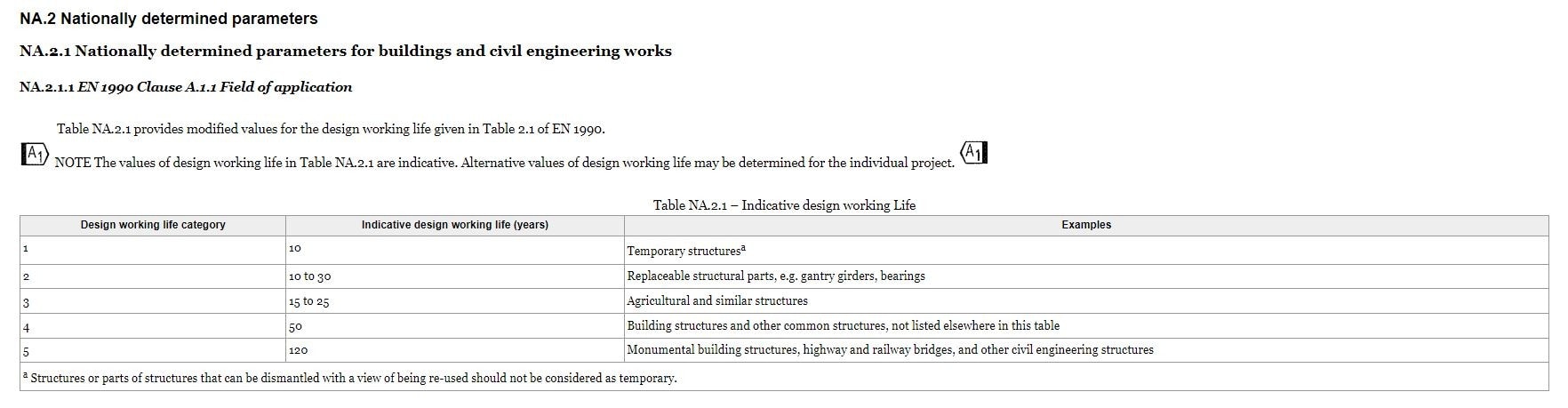
Figure 2
As the most restrictive requirement comes from applications in civil engineering structures, the following part of the article will concentrate on those cases, for example, in a tunnel or a railway, with a common post installed rebar application (new slab to existing wall connection) or a bridge in a motorway where some concrete overlay will be needed to increase the thickness of the slab and strengthen the structure, all of these will be designed to be executed with chemical mortars and post installed rebar solutions.
Essentially the underlying factor is that it is important to understand the regulatory system in Europe. There are 3 key documents issued by the European Organisation for Technical Assessment (EOTA) to regulate products, assessment, method and their applications. (figure 3)

Figure 3
- The first one will be the European Assessment Document (EAD), this details the method and criteria for assessing the product performance. It also covers the test program for products to receive the ETA according to the relevant EAD
- The second one will be the Technical Report (TR) which provides a design method to support the development of the relevant EAD.
- And lastly there is the ETA that describes the intended use of the product and its performance data, which is based on the evaluation of the test results according to the relevant EAD

Figure 4
The traditional working life mentioned in the ETA is limited to 50 years (figure 4) meaning that there is not a standardised product assessment or evaluation method to verify the anchor performance for 100/120 years and different people in the industry have been using their own approach with an extreme lack of transparency on how the testing was done or how to evaluate the performance. In 2019-2020, the European Organisation of Technical Assessment, AKA EOTA, launched a standardised approach to test and evaluate anchor products creating an ETA for 100 years service life both for anchoring and post installed rebar applications (figure 5)
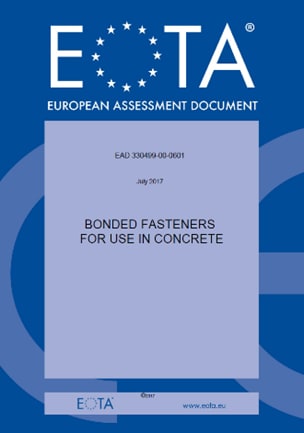
Figure 5
The same assessment for the 50-year service life was extended to 100-years under Annex C of the updated (EAD) 330499-01-0601. The table below illustrates the key differences between the two service life considerations (using as example RE 500 V4) (figure 6)
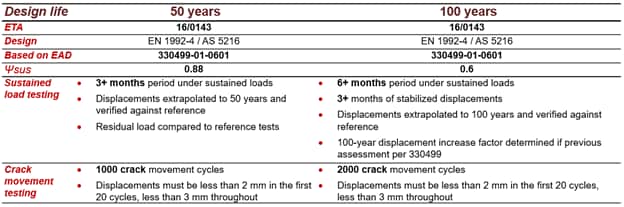
Figure 6
In Hilti we carry an ultimate chemical anchor portfolio that will cover the needs of the 100-years service life in civil applications, RE500V4, the epoxy mortar and HY200-R V3, the hybrid mortar. Both of them are fully covered for post installed rebar applications under the European Regulatory Framework and are assessed according to the relevant EAD. They also come with the corresponding ETA to support the designs through EC2 and TR069 (figure 7)

Figure 7
Any extended service life (120 years requirement) will currently need an Engineering Judgment from the product manufacturer (Hilti in this case) and it will be based on the test results provided with the ETA 100 years assessment.
You are also welcome to ask us for support: simply leave a comment or post your question in the community, or improve your knowledge and skills via our Webinars or training sessions.
For the latest news in engineering solutions and innovations follow us on: LinkedIn, Instagram and Twitter
This article is part of an ongoing series dedicated to Rebar topics. Find more here